Posts Tagged ‘FISC’

What’s new at FreeBalance?

Monday, February 4th, 2013

This weekly news update provides the Government Resource Planning (GRP) community with a brief overview of recent FreeBalance developments and relevant industry news.

FreeBalance Releases Public Financial Management (PFM) Good Practice Documents

FreeBalance recently released a set of five (5) PFM Good Practice Documents. FreeBalance Good Practice documents collect lessons learned with FreeBalance government customers in 20 countries and research used for product and services development. FreeBalance has a mission, as a For Profit Social Enterprise (FOPSE), to share lessons learned with the global PFM community. “There are very few ‘best practices’ in government financial management,” said Manuel Pietra, FreeBalance President and CEO. “Yet there are good practices that are ideal for governments based on their context.”

Read the Good Practice documents >>

New Alliance Positions FreeBalance and everis for GRP Growth in Latin America & the Caribbean

FreeBalance and everis announced a global product and services alliance focused initially on Government Resource Planning in Latin America & the Caribbean. The alliance will scale over time to address the growing demand for GRP solutions worldwide. The product and services partnership scope includes public financial management, civil service management, open government transparency and public procurement software and solutions. The alliance provides an opportunity for FreeBalance and everis to collaborate on initiatives that will empower citizens and transform government services through proven technology.

Read more about the alliance with everis >>

Top 7 Lessons Learned at FreeBalance International Steering Committee 2013

The FreeBalance International Steering Committee (FISC) conference was held last week in Ottawa. FISC, differs in many ways from traditional user conferences. Typical enterprise software companies leverage conferences to sell more software – to tell customers what features they are going to get. FISC, on the other hand, enables customers to change our product roadmap. They also tell us how to change our customer support processes. This was our 7th annual conference. So, we decided to share the top 7 things we learned this year.

Read more about FISC Top 7 >>

Federal spending watchdog says checks system ‘broken’

After five years of providing senators and members of Parliament with independent analysis on the state of the nation’s finances, the federal spending watchdog says the system of checks and balances is “broken.” In an interview airing Saturday on CBC Radio’s The House, Kevin Page, the parliamentary budget officer (PBO), told host Evan Solomon the Office of the Parliamentary Budget Officer will never truly be independent until it reports directly to Parliament.

Read the full article >>

Quoi de neuf à FreeBalance?

Monday, February 4th, 2013

Ces nouvelles hebdomadaires apportent à la communauté de la planification des ressources gouvernementales (PRG) un aperçu général des récents développements de FreeBalance et des nouvelles pertinentes de l’industrie.

FreeBalance publie des documents relatifs aux pratiques d’excellence dans la gestion des finances publiques (GFP)

FreeBalance a récemment publié une série de cinq (5) documents relatifs aux pratiques d’excellence dans la gestion des finances publiques (GFP). Les documents de FreeBalance concernant ces pratiques regroupent les leçons apprises avec les clients gouvernementaux de FreeBalance dans 20 pays, ainsi que la recherche utilisée dans le développement des produits et services. FreeBalance a la mission, en tant qu’entreprise sociale à but lucratif (FOPSE), de partager les leçons apprises avec la communauté mondiale de la GFP. « Il y a très peu de ‘meilleures pratiques’ en matière de gestion des finances gouvernementales », a déclaré Manuel Pietra, président-directeur général de FreeBalance. « Pourtant, il y a des pratiques d’excellence qui sont idéales pour les gouvernements en fonction de leur contexte. »

Lire les documents relatifs au pratiques d’excellence >>

La nouvelle alliance positionne FreeBalance et everis pour la PRG en Amérique latine et dans les Caraïbes

FreeBalance et everis ont annoncé une alliance globale sur les produits et services qui se concentre d’abord sur la planification des ressources du gouvernement en Amérique latine et dans les Caraïbes. L’alliance va évoluer au fil du temps pour répondre à la demande croissante de solutions de PRG dans le monde entier. La portée du partenariat sur les produits et services inclut la gestion des finances publiques, la gestion de la fonction publique, la transparence du gouvernement ouvert et les achats gouvernementaux de logiciels et de solutions. L’alliance permet à FreeBalance et à everis de collaborer à des initiatives qui donneront des responsabilités aux citoyens et transformeront les services gouvernementaux grâce à la technologie éprouvée.

Lire la suite au sujet de l’alliance avec everis >>

Classement des 7 leçons apprises lors du Comité international de pilotage de FreeBalance

La conférence du Comité international de pilotage de FreeBalance (FISC) a eu lieu la semaine dernière à Ottawa. Le FISC diffère à bien des égards des conférences traditionnelles d’utilisateurs. Les entreprises typiques de logiciels tirent profit des conférences afin de vendre plus de logiciels – pour dire aux clients les fonctionnalités dont ils vont disposer. Le FISC, au contraire, permet aux clients de changer la feuille de route de notre produit. Ils nous disent également de quelle manière changer nos processus de soutien à la clientèle. Comme il s’agissait de notre 7e conférence annuelle, nous avons donc décidé de partager les 7 premières choses que nous avons apprises cette année.

Lire la suite au sujet des 7 leçons du FISC >>

L’organisme de surveillance des dépenses fédérales indique que le système de contrôle est « cassé »

Après avoir fournit pendant cinq ans des analyses indépendantes aux sénateurs et députés au sujet de l’état des finances du pays, l’organisme de surveillance des dépenses fédérales indique que le système de contrôle et d’équilibre est « cassé ». Dans une entrevue diffusée samedi lors de l’émission radiophonique The House de CBC, Kevin Page, le directeur parlementaire du budget (DPB), a déclaré au présentateur, Evan Solomon, que le bureau du directeur parlementaire du budget ne sera jamais réellement indépendant tant qu’il ne relèvera pas directement du Parlement.

Lire l’article complet >>

Customer Centric Processes in Operation at the FreeBalance International Steering Committee Conference

Thursday, January 31st, 2013

Doug Hadden, VP Products

FISC 2013 is our Seventh Annual FreeBalance International Steering Committee conference. The FISC approach differs from the traditional technology user group conference in many ways – good ways, we think

For one thing, FISC is about enabling customers to influence FreeBalance, not the other way around.

In the spirit of transparency, we were live tweeting from FISC last week and we’ve ‘storified’ it below. FISC is a key element of our customer service strategy:


Customer Centric in Action?

FreeBalance International Steering Committee customer-centric processes at FISC7 in January 2013 in Ottawa Canada

Storified by · Wed, Jan 30 2013 10:38:41

Gerard Rao facilitated a customer service improvements brainstorm. He began by explaining the challenges of global support because FreeBalance has implementations in all six World Bank regions and in North America.
Gerard Rao presenting at #FISC7 on improving #custserv by showing current processes yfrog.com/obeafnedjFreeBalance
Gerard Rao: how can we improve our #ISO9001 #custserv processes? Customer brainstorm & case study at #FISC7FreeBalance
Gerard Rao: global support is handled via #cloud to ensure leveraging the right people on the case #custserv #FISC7FreeBalance
Gerard Rao: customer point of contact has access to internal case management system for internal help desk #FISC7FreeBalance
Gerard Rao: FreeBalance set up local-regional offices to handle similar languages, cultures, time zones #custserv #FISC7FreeBalance
Gerard Rao: local FreeBalance offices mirror customer configuration & can provide disaster recovery #custserv #FISC7FreeBalance
Gerard Rao: mirror local office data with head office in #Ottawa for disaster recovery #FISC7FreeBalance
Mirroring Gerard Rao? yfrog.com/oercthmfj scariest #FISC7 slideFreeBalance
Gerard Rao: the sun never sets on the FreeBalance #custserv world #FISC7FreeBalance
Gerard Rao: advantage of logging cases enables seeing history/patterns & hold FreeBalance accountable #FISC7 #custservFreeBalance
Gerard Rao: use of knowledge base is effective to solve problems #custserv #FISC7FreeBalance
Gerard Rao: gets the same issue every year from the same customer with the same staff, how can we solve this? #FISC7FreeBalance
Gerard Rao: emergency case 4pm Friday, was responded to immediately asking for details #FISC7, did not have sufficient infoFreeBalance
FreeBalance customer: use of electronic portal, takes some time before people realize that action will be taken #FISC7 #custservFreeBalance
FreeBalance #custserv shows reduction in number of open cases since 2008, slight increase with new sw release #FISC7 pic.twitter.com/RN8iDO9NFreeBalance
Gerard Rao recommends that internal government help desks should have #SLAs to set expectations #FISC7FreeBalance
FreeBalance customer: new staff in governments often untrained on help desk procedures, sees #SLAs for internal a good idea #FISC7FreeBalance
FreeBalance Customer: often person can’t recreate the problem they were reporting, it’s a capacity issue #FISC7FreeBalance
Gerard Rao: FreeBalance Fridays, end of work week, push out revision updates, certified, easy delivery #FISC7FreeBalance
#Canada has strict privacy laws so government data is secure at FreeBalance in our Protected B facility #FISC7FreeBalance
Gerard Rao: explaining confidentiality and security considerations for government customer data #custserv #FISC7FreeBalance
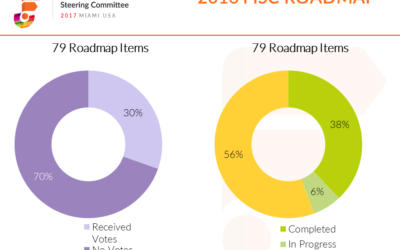
FreeBalance developed a new process for developing the product roadmap. FreeBalance presents the draft 2 year plan to FISC every year. Government customers adapt the roadmap based on a brainstorming method followed by voting. Doug Hadden facilitated the 2 roadmap sessions.
Doug Hadden, #FISC7 product roadmap + 6 thinking hats yfrog.com/oe19doijFreeBalance
we’re about 1/2 way through the #FISC7 roadmap process with customers – where customers set our priorities pic.twitter.com/8U45SOSCFreeBalance
Doug Hadden presenting the current product roadmap status #FISC7, customers will be changing the roadmap after voting Thursday #custservFreeBalance

Also see:

  • Customers Gather in Ottawa for 7th Annual Steering Committee Meeting
  • Introduction to the FreeBalance International Steering Committee conference, FISC7 in Ottawa
  • FreeBalance International Steering Committee: FreeBalance Product Update
  • Customer Centric Processes in Operation at the FreeBalance International Steering Committee Conference
  • PFM Good Practice Discussions at FISC
  • What are the Incentives for Transparency in Developing Country Governments?
  • 7 Highlights from the past FreeBalance International Steering Committee Conferences
  • 7 Things about the 7th FreeBalance International Steering Committee
  • Top 7 Lessons Learned at FISC7
  • Top 7 Lessons Learned at FISC7

    Wednesday, January 30th, 2013

    Doug Hadden, VP Products

    The FreeBalance International Steering Committee (FISC) conference was held last week in Ottawa. FISC, as I’ve written before , differs in many ways from traditional user conferences. Typical enterprise software companies leverage conferences to sell more software – to tell customers what features they are going to get. FISC, on the other hand, enables customers to change our product roadmap. They also tell us how to change our customer support processes.

    This was our 7th annual conference. So, the top 7 things I learned this year. ( Also see the Top 7 Highlights from past FISCs )

    1. Common Problems, Common Solutions?

    One FISC attendee mentioned that he had learned more about good practices in public financial management at FISC than through Public Financial Management (PFM) conferences or donor technical assistance. This generated an interesting discussion. Yes, there was a bit of “beating up the donors.” Primarily about the subjective nature of technical assistance. How advice is often contradictory depending on the consultant. And the extent to which person experiences in the consultant’s home country affects advice.

    The difference at FISC is the sharing of what works in countries in similar circumstances. What has often called “South-South” cooperation” . The emergence of BRIC countries has put some doubt into the “Washington Consensus” approach to development.

    FISC is also different from traditional user conferences because each customer presents on lessons learned in PFM reform. That’s right: no fluff about how they used our software to overcome some challenge. This year presenters described good practices in budget formulation, problems in identifying and removing ghost workers, improving cash and liquidity management, and capacity building. Turns out that there are common solutions to common problems.

    2. Transparency has become a Competitive Sport

    Transparency is no longer a sport of kings – for developed countries. Emerging economies are following the lead of Brazil and the Open Government Partnership. Fiscal transparency is facilitated in less developed countries by leveraging GRP systems. Unlike more developed countries with multiple financial systems, many governments in emerging economies – even so-called “fragile states” – have single GRP systems. We have seen some interesting innovation:

  • Timor-Leste support for 10 Years of budget data, procurement, aid transparency, and government results
  • Liberia supporting real-time budget information display >>
  • Afghanistan rising to 59 points on the Open Budget Index (just below Italy at 61)
  • Timor-Leste in the high range in the Revenue Watch Index at 70.5 points (just below the United States at 71.4)
  • 3. Interest in Government Performance Management on the Increase

    The roadmap process used by FreeBalance is somewhat unique in the industry. We provide a list of current and potential Government Resource Planning (GRP) modules based on the PFM Component Map. We show what modules are currently available and those modules that we are committed to completing. We also show proposed modules. Customers add ideas for new modules then vote on the 2 year roadmap. This can adjust our roadmap significantly.

    The takeaway over the past 4 years is the increasing interest in government performance management tools. This might seem somewhat strange that performance management has a significant interest in emerging economy governments. My sense is that the resilience of some countries to the financial crisis, critical linkage of revenue to economic factors and increasing oversight of civil society organizations has generated this interest in performance tools.

    4. Achieve Control by Giving up Control

    Our competitive environment with so many ERP vendors seems daunting to many observers. As is our insistence to position FreeBalance squarely in the government space – GRP. Anti-ERP (especially given so many ERP failures in government.) How can a smaller yet global company compete effectively?

    The secret is to let customers drive product and service improvements. To operate within the PFM community rather than broadcast PR as the main mechanism of engagement. This is how we learn and leap ahead of our competitors – give up control to customers.

    5. Sharing is the New Power

    Information is power. Holding on to that information is no longer as powerful as sharing what you’ve learned. Sharing results in learning more. Our customers find this outcome as part of FISC. We find that providing our research into PFM and technology is valuable. That’s why we share what we’ve learned with governments who are not our customers.

    Sharing becomes an annuity. It provides a feedback loop between the theoretical and the practical. It helps us prioritize what is important for government customers.

    6. Software Architecture Design Matters

    Many observers believe that there is nothing particularly different when comparing software architectures among enterprise vendors. The large ERP vendors, for example, have a broad functional coverage across many business domains. It’s often thought to be six of one and half a dozen of the other when comparing technology.

    This is a myth.

    We find that our software architecture, the FreeBalance Accountability Platform, has enabled us to respond much faster to changing customer requirements. To meet the priorities set at FISC. Why? The architecture does not contain any legacy client/server code, is a modern design supporting component reuse and was designed for government to provide extensibility.

    7. Having a Conference in Ottawa in January might not be a Good Idea

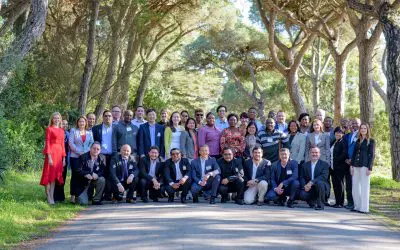
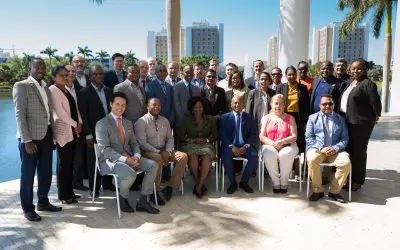
    This was the first FISC where the attendee picture was shot indoors. It also seemed to confirm virtually every stereotype of Canadian winters as the temperature dipped below -30C.

    Lesson learned: FISC 2014 should be closer to the equator!

    Also see:

  • Customers Gather in Ottawa for 7th Annual Steering Committee Meeting
  • Introduction to the FreeBalance International Steering Committee conference, FISC7 in Ottawa
  • FreeBalance International Steering Committee: FreeBalance Product Update
  • Customer Centric Processes in Operation at the FreeBalance International Steering Committee Conference
  • PFM Good Practice Discussions at FISC
  • What are the Incentives for Transparency in Developing Country Governments?
  • 7 Highlights from the past FreeBalance International Steering Committee Conferences
  • 7 Things about the 7th FreeBalance International Steering Committee
  • Top 7 Lessons Learned at FISC7
  • What’s new at FreeBalance? 2013-01-18

    Tuesday, January 29th, 2013

    This weekly news update provides the Government Resource Planning (GRP) community with a brief overview of recent FreeBalance developments and relevant industry news.

    FreeBalance Customers Gather in Ottawa for 7th Annual Steering Committee Meeting

    The FreeBalance International Steering Committee (FISC) event is taking place from January 21-24, 2013 in Ottawa, Canada. The event is designed to share good governance practices among countries and is critical to the FreeBalance customer-centric approach to social responsibility. The theme of the seventh annual FISC event is “A Story of 7’s”. The theme is intended to recognize the history and value of the steering committee over the last seven years and highlight the impact that FreeBalance Accountability Suite Version 7 software is having on global PFM reform initiatives.

    Read more about FISC >>

    PFM in a Changing World – the Harvard Perspective

    Several FreeBalance executives had the opportunity to participate in the Public Financial Management in a Changing World program last week at Harvard University, John F. Kennedy School of Government. The program was attended by more than 60 Public Financial Management professionals from 33 countries around the world. The program successfully brought together senior government officials involved in PFM reform with domain experts from international financial institutions and the private sector.

    Read the full article >>

    7 Highlights from the past FreeBalance International Steering Committee Conferences

    FISC 2013 is our Seventh Annual FreeBalance International Steering Committee conference. The FISC approach differs from the traditional technology user group conference in many ways – good ways, we think. For one thing, FISC is about enabling customers to influence FreeBalance, not the other way around. And, FISC is about gathering Public Financial Management (PFM) professionals from different countries around the world to help share good practices. We often have keynote speakers. And, we share our research and experience well beyond the narrow boundaries of being a software company

    Read more on the FreeBalance blog >>

    How Can the Pace of Budget Transparency Be Increased? Examining the Open Budget Survey 2012

    The International Budget Partnership (IBP) and the World Bank Institute (WBI) are pleased to invite you to join practitioners in the fields of development and fiscal management in a discussion on how to increase budget transparency and participation around the world. The discussion will include a presentation of the results of the IBP’s latest round of the Open Budget Survey and then focus on identifying innovative and practical suggestions for rapidly improving country performance on the Survey.

    Read more on the IMF blog >>

    The Philippines Introduces E-Payment System In E-Procurement

    The Philippine Government Electronic Procurement System (PhilGEPS), in partnership with the Land Bank of the Philippines, introduced a new e-payment system which seeks to enhance transparency in how the government agencies transact and do business with its suppliers. The PhilGEPS is the central portal of all public procurement activities that provides both government agencies and suppliers a more open, transparent and competitive environment.

    Read more on the FutureGov website >>

    7 Highlights from the past FreeBalance International Steering Committee Conferences

    Sunday, January 20th, 2013

    Doug Hadden, VP Products

    FISC 2013 is our Seventh Annual FreeBalance International Steering Committee conference. The FISC approach differs from the traditional technology user group conference in many ways – good ways, we think

    For one thing, FISC is about enabling customers to influence FreeBalance, not the other way around.

    And, FISC is about gathering Public Financial Management (PFM) professionals from different countries around the world to help share good practices. We often have keynote speakers. And, we share our research and experience well beyond the narrow boundaries of being a software company. That’s our mission. I looked through past public FISC presentations (and those adapted from FISC and made public) and found my 7 favourites :

    1. Sequencing Public Financial Management Reform

    David Nummy from Grant Thornton providing practical experience about PFM reform in developing countries. PFM reform sequencing is a critical concern in developing countries and was of great interest to our government customers. This resulted in a brainstorming session and spirited discussions. It was agreed that capacity building was the most critical factor for reform success for the first stages. But, the importance of capacity building never dropped below “very important” for every stage of PFM maturity.

    Nummy Sequencing Pfm from icgfmconference

    2. Governance Valuation

    We’ve taken lessons in PFM sequencing over the years further to provide tools to help governments decide on the most effective reform courses of action. This presentation, slightly adapted from FISC 2012, was built on many of the ideas from the brainstorming from FISC 2008.

    2012 04-19 governance valuation from FreeBalance

    3. IFMIS of Tomorrow

    We use FISC to help us understand the future of Public Financial Management. We also share our research with government customers. We adapted this from the presentation we gave at the first FISC in 2007. Some of the predictions did come to pass.

    Government Financial Management System Of Tomorrow from FreeBalance

    4. Technology Leapfrog

    Leveraging technology for governance is a concern for a software company like FreeBalance. Our government customers have been leveraging technology from FreeBalance and other vendors to enable reform and transparency. This often enables these governments to “leapfrog” more developed countries. This presentation was adapted from content given by our customers at different FISC events. Ever government that attends FISC provides an overview of PFM lessons learned: challenges, solutions, achievements with an emphasis on initiatives from the past year.

    Technology leapfrog in government transparency developing countries from FreeBalance

    5. The Social Future of PFM

    Social media, open data, Government 2.0 and crowdsourcing represents significant opportunities and risks for government. We reflected on this last year at FISC in the wake of the Arab Spring, the Ushahidi platform and the Tea Party movement. And, we presented this at the ICGFM conference later that year.

    The [social] future of public financial management from FreeBalance

    6. Lessons from Fragile States

    Steve Symanksy, formerly at the IMF, provided insight based on his experience in fragile states. He explained that the view that PFM reform should start with proper planning is incorrect: fragile states should start with budget execution and control first.

    Pfm reform and_donor_funding_in_post-conflict-fisc from FreeBalance

    7. Post-Conflict Lessons

    FreeBalance has been successful implementing sustainable Government Resource Planning (GRP) systems in post-conflict countries. (This seems to be confirmed in a recent World Bank report.” We’ve also been successful in more developed countries in achieving low costs for customers and ease to adapt software to changing needs. We reflected on the post-conflict experience using some of the content from customer presentations.

    Post conflict-public-financial-management

    ¿Qué hay de nuevo en FreeBalance?

    Friday, January 18th, 2013

    Esta actualización semanal de noticias proporciona a la comunidad de Planeación de Recursos de Gobierno (GRP*) una visión general de los últimos acontecimientos de FreeBalance, además de noticias relevantes de la industria.

    PFM en un mundo cambiante – La Perspectiva de Harvard

    Varios ejecutivos de FreeBalance tuvieron la oportunidad de participar la semana pasada en el programa de Administración de Finanzas Públicas en un Mundo Cambiante en la Escuela de Gobierno John F. Kennedy de la Universidad de Harvard. Al programa asistieron más de 60 profesionales de Administración de Finanzas Públicas de 33 países. El programa reunió con éxito a funcionarios gubernamentales que participan en reforma al PFM con expertos de dominio de instituciones financieras internacionales y del sector privado.

    Más sobre el programa de PFM >>

    Lea el artículo completo en el Blog de FreeBalance>>

    7 Asuntos sobre el 7mo Comité Directivo Internacional de FreeBalance

    Nos estamos preparando para la conferencia de Comité Directivo Internacional de FreeBalance (FISC, por sus siglas en inglés) de este mes en Ottawa, muy cerca de nuestra oficina principal. ¿Al fin de cuentas, quien no quisiera estar en Ottawa en enero? La temperatura mínima promedio en enero es de −15.3 °C (4.5 °F) en la cual se llevará acabo nuestra séptima conferencia anual. Esto no lleva a las 7 principales cosas que las muy agiles compañíax de software pueden aprender de nuestro aproximación para ser más centradas en el cliente. Principalmente, este es un comité directivo, no una conferencia de usuarios, lo que puede parecer un matiz sutil ya que hemos adaptado la tecnología estándar de conferencia de usuarios para ser más efectivos.

    Más>>

    ¿Salvar el mundo a través de los medios sociales? Cómo el desarrollo se vuelve digital

    Los medios sociales y las tecnologías móviles ofrecen una amplia gama de beneficios para las personas que trabajen en el área de desarrollo: una forma potencialmente barata y eficiente de vincular a los ciudadanos con sus gobiernos, la oportunidad de supervisar el progreso de los proyectos en tiempo real y la capacidad de conectarse con personas desde lugares remotos del mundo para compartir experiencias y enseñar las mejores prácticas. No es sorpresa que haya un flujo interminable de proyectos de desarrollo que buscan explotar estas tecnologías. En muchos casos, todavía es temprano para determinar qué diferencia marcarán estas iniciativas, pero cinco de ellas llamaron nuestra atención.

    Lea el artículo completo en el Blog La Pobreza Importa>>

    Las consultas arrojan poco consenso sobre IPSAS en la Unión Europea

    Una consulta sobre si todos los países de la Unión Europea deberían usar los Estándares Internacionales de Contabilidad en el Sector Público (IPSAS, por sus siglas en inglés) ha revelado una notable división de opiniones. Solo un poco más de un tercio (38%) de los encuestados considera a los IPSAS adecuados para implementarse en toda la UE ya sea en su totalidad o con ‘obstáculos menores’ a superar, 31% dijo que eran parcialmente adecuados y 28% señaló que no son adecuados. La consulta, realizada por la agencia estadística Eurostat en febrero, preguntaba si los estándares eran necesarios para mejorar la vigilancia fiscal. Entre los participantes se incluían oficinas estadísticas nacionales, departamentos gubernamentales, oficinas de auditorías y cuerpos de contabilidad como CIPFA.

    Más en el blog Finanzas Públicas Internacionales>

    Simplificando los Documentos de Presupuestos – ¿Es Hora de un Estándar Internacional?

    Mejorar la calidad de la documentación de presupuestos es tema central de muchas reformas destinadas a mejorar la comprensión del contenido de los estimados presupuestarios así como fomentar la transparencia y la responsabilidad. Algunas leyes presupuestarias establecen un conjunto mínimo de documentos que deben acompañar los estimados presupuestarios. Estos pueden incluir, por ejemplo, informes sobre: (i) la previsión macroeconómica a mediano plazo; (ii) políticas fiscales y tendencias del gasto público; (iii) previsiones a mediano plazo de ingresos gubernamentales, gastos, deuda y el balance fiscal; (iv) techos de recursos a mediano plazo; (v) garantías gubernamentales, pasivos contingentes y otros riesgos fiscales; (vi) gastos en programas de inversión y proyectos por sector y (vii) proyecciones sobre flujos de ayudas de donantes. En países con una tradición de Westminster, el discurso sobre presupuestos incluye buena parte de esta información; sin embargo, se pueden presentar documentos adicionales al parlamento.

    Más en el blog del FMI sobre gestión financiera pública>>>

    *por sus siglas en inglés


    Quoi de neuf à FreeBalance?

    Friday, January 18th, 2013

    Ces dernières nouvelles hebdomadaires apportent à la communauté de la planification des ressources gouvernementales (GRP) une brève vue générale des récents développements de FreeBalance et des nouvelles pertinentes de l’industrie.

    PFM dans un monde qui bouge – La Perspective de Harvard

    Plusieurs dirigeants FreeBalance ont eu l’opportunité de participer à la Gestion Financière Publique dans un Programme de Monde Qui Bouge la semaine dernière à l’Université de Harvard, Ecole Gouvernementale John F. Kennedy. Le programme a été suivi par plus de 60 professionnels de la Gestion Financière Publique et venaient de 33 pays. Le programme a réuni avec succès des officiels impliqués dans la réforme PFM avec des experts d’institutions financières internationales et du secteur privé.

    Lire plus sur le the PFM program>>

    Lire l’article complet sur le blog FreeBalance>>

    7 points à propos du 7ème Comité FreeBalance International Steering

    Nous nous préparons actuellement pour la conférence du Comité FreeBalance International Steering (FISC) vers la fin de ce mois à Ottawa près de notre siège. Après tout, qui ne voudrait pas être à Ottawa en un merveilleux mois de janvier ? [La température minimum moyenne en janvier est de -15,3°C (4,5°F)]. C’est notre 7ème conférence annuelle. Ce qui m’amène aux 7 points importants que des entreprises IT très flexibles peuvent apprendre de notre approche pour être plus centrées sur la clientèle. Une chose, c’est un comité de direction, pas une conférence d’utilisateur. Cela peut paraitre une nuance subtile car nous avons adapté la conférence d’usager de technologie standard pour être plus efficace.

    Lire plus>>

    Une enquête au sein de l’Europe élargie montre peu de consensus envers l’IPSAS

    Une enquête, pour savoir si tous les pays de l’Union Européenne devraient utiliser les Standards Internationaux de Comptabilité du Secteur Public (IPSAS), a révélé des opinions divergentes significatives. Seulement un tiers (38%) des répondants considéraient que l’IPSAS est approprié pour être mis en œuvre soit dans sa totalité, soit avec quelques « obstacles mineurs » à surmonter, 31% ont dit qu’il était approprié en partie et 28% pensaient qu’il est inapproprié. L’enquête, lancée en février dernier par l’agence de statistiques Eurostat, demandait si des standards étaient nécessaires pour améliorer la surveillance fiscale. Les répondants étaient constitués de bureaux de statistiques, d’organismes gouvernementaux, de bureaux d’audit et d’organismes comptables comme le CIPFA (Institut Agréé de Finance et de Comptabilité Publique).

    En lire plus sur le blog de la Finance Publique Internationale>>

    Simplification des documents budgétaires – Le moment est-il venu pour des Normes Internationales?

    Améliorer la qualité de la documentation budgétaire est au cœur de nombreuses réformes visant à augmenter la compréhension du contenu des estimations de budget de même qu’à promouvoir la transparence et la redevabilité. Des lois budgétaires préconisent un minimum de documents pour accompagner les estimations budgétaires. Par exemple, ils peuvent comprendre des rapports sur : (i) la prévision macroéconomique à moyen terme ; (ii) la politique fiscale et les tendances de dépenses publiques ; (iii) les prévisions à moyen terme des revenus du gouvernement, de ses dépenses, dettes et la balance fiscale ; ((iv) les plafonds de ressources à moyen terme ; (v) les garanties du gouvernement, les obligations conditionnelles et autres risques fiscaux ; (vi) les dépenses de programmes et de projets par secteur ; et (vii) les projections de flux d’aide de donation. Dans les pays de tradition britannique, le discours budgétaire inclut la plupart de ces informations, mais des documents supplémentaires peuvent être présentés au Parlement.

    En lire plus sur le blog PFM du FMI>>


    What’s new at FreeBalance?

    Friday, January 18th, 2013

    This weekly news update provides the Government Resource Planning (GRP) community with a brief overview of recent FreeBalance developments and relevant industry news.

    PFM in a Changing World – the Harvard Perspective

    Several FreeBalance executives had the opportunity to participate in the Public Financial Management in a Changing World program last week at Harvard University, John F. Kennedy School of Government. The program was attended by more than 60 Public Financial Management professionals from 33 countries around the world. The program successfully brought together senior government officials involved in PFM reform with domain experts from international financial institutions and the private sector.

    Read more about the PFM program>>

    Read the full article on the FreeBalance blog>>

    7 Things about the 7th FreeBalance International Steering Committee

    We’re preparing for the FreeBalance International Steering Committee (FISC) conference later this month in Ottawa close to our head office. After all, who wouldn’t want to be in Ottawa in beautiful January? [The average January minimum temperature is −15.3 °C (4.5 °F)]. It’s our 7th annual conference. Which brings me to the top 7 things that highly agile software companies can learn from our approach to be more customer-centric. For one thing, it’s a steering committee, not a user conference. This might seem like a subtle nuance because we’ve adapted the standard technology user conference to be more effective.
    Read more>>

    Saving the world through social media? How development is going digital

    Social media and mobile technologies offer a wide range of benefits for people working in development: a potentially cheap and efficient way to link citizens with their governments, the chance to monitor real-time progress on projects, and the ability to connect people from remote parts of the world to share experiences and teach best practice. It is no surprise that there’s an endless stream of development projects trying to tap into these technologies. In many cases it’s still too early to tell what difference these efforts will make, but here are five that caught our eye.
    Read the full article on the Poverty Matters Blog>>

    Consultation shows little consensus on EU-wide IPSAS

    A consultation on whether all European Union countries should use International Public Sector Accounting Standards has revealed a significant split of opinion. Just over a third (38%) of respondents considered Ipsas suitable for EU-wide implementation either in full or with ‘minor obstacles’ overcome, 31% said they were partly suitable and 28% thought they were unsuitable. The consultation, launched by the statistical agency Eurostat last February, asked whether the standards were needed to improve fiscal surveillance. Respondents included national statistical offices, government departments, audit offices and accountancy bodies such as CIPFA.
    Read more on the Public Finance International blog>>

    Simplifying Budget Documents – Time for an International Standard?

    Improving the quality of budget documentation lies at the heart of many reforms aimed at enhancing understanding of the content of the budget estimates as well as fostering transparency and accountability. Some budget laws prescribe a minimum set of documents to accompany the budget estimates. These may include, for example, reports on: (i) the medium-term macroeconomic forecast; (ii) fiscal policies and public expenditure trends; (ii) medium-term forecasts of government revenues, expenditures, debt, and the fiscal balance; (iii) medium-term resource ceilings; (iv) government guarantees, contingent liabilities and other fiscal risks; (v) spending on expenditure programs and projects by sector; and (vi) projections of donor aid flows. In countries with a Westminster tradition, the budget speech includes much of this information, but additional documents may be presented to the parliament.
    Read more on the IMF’s PFM blog>>


    7 Things about the 7th FreeBalance International Steering Committee

    Friday, January 4th, 2013

    Doug Hadden, VP Products

    We’re preparing for the FreeBalance International Steering Committee (FISC) conference later this month in Ottawa close to our head office. After all, who wouldn’t want to be in Ottawa in beautiful January? [The average January minimum temperature is −15.3 °C (4.5 °F)]

    It’s our 7th annual conference. Which brings me to the top 7 things that highly agile software companies can learn from our approach to be more customer-centric. For one thing, it’s a steering committee, not a user conference. This might seem like a subtle nuance because we’ve adapted the standard technology user conference to be more effective. Differences include:

    1. Customers set the product roadmap: we don’t tell customers what they are going to get and when they are going to get it. Rather, we present a working roadmap and customers change it. This means that our product direction is adjusted to meet changing needs.
    2. No sales people: that’s right – FISC is not about selling. It’s about engaging FreeBalance executives and managers to change our products and processes. Unlike the traditional user group, we’re not there to influence customers – we’re there to be influenced by customers.
    3. Maintenance pays for the event: we don’t use the conference to generate more revenue from customers. Rather, governments that pay maintenance are provided with two places at the conference including air fare and hotel at FreeBalance internal rules (i.e. least expensive economy flight.) We don’t choose the representatives. And, we don’t penalize customers who need to come from afar.
    4. It’s no “boondoggle”: this isn’t a passive event. Customers are placed on panels, present the latest good practices used by their respective governments, complete customer satisfaction questionnaires and take an active role in brainstorming on the roadmap. Sure, it’s not all work so we arrange for cultural events and provide some rest for the jet lagged.
    5. It’s not all about us: this is an opportunity for government professionals to network and share good practices. We bring in expert speakers covering important Public Financial Management (PFM) topics. This is a critical part of our mission as a for-profit social enterprise.
    6. Transparent with privacy: we respect the privacy of our customers so we do not provide any information on our web site, blog or tweet stream to identify any specific customer’s comments. We do provide overview information of the conferences and tweet interesting comments. We do publicize the voted FISC Chair. [The current FISC Chair is Dr. Cleopatra Gittens, the Accountant General for Antigua and Barbuda.]
    7. Agile: the schedule can go out the door based on customer feedback and results from brainstorming using the “6 Thinking Hats” methodology. Our President and CEO, Manuel Pietra, enjoys these on-the-spot adjustments, the midnight preparation for an unscheduled presentation – basically the complete destruction of the agenda to better align with customer needs. (Which drives me crazy.)